Yamaha RX100 : The Yamaha RX100 is much more than just a motorcycle in India; it is a cultural icon that bridges generations of riders.
Born in the mid‑1980s and discontinued in the mid‑1990s, the RX100 continues to enjoy a near‑mythical status among two‑wheeler enthusiasts.
Even decades after its production ended, “the RX” is still a frequent topic in garage chats, bike forums, and motorcycling circles across the country.
The Birth of a Legend
The Yamaha RX100 made its Indian debut in 1985 as a 98 cc two‑stroke commuter‑cum‑performance bike built in collaboration with the Escorts Group.
At a time when most 100 cc motorcycles were tuned for economy rather than excitement, the RX100 stood out with its sharp acceleration, crisp handling, and that distinctive two‑stroke bark.
Lightweight, compact, and surprisingly powerful for its capacity, it quickly became a favorite among young riders and first‑time buyers who wanted a bit of thrill without stretching their budgets.
Why the RX100 Still Holds a Special Place
Even though Yamaha stopped manufacturing the RX100 in India by 1996, demand for the bike has never really faded.
Also Read: Oppo A6 Pro 50MP front Camera Smartphone, battery is 7800mAH in very low price cost
Second‑hand units change hands at premium prices, often matching or even exceeding the cost of new 125 cc motorcycles in some markets.
Auto experts point to a few key factors: its simple air‑cooled 98 cc engine, 4‑speed manual gearbox, and drum‑brake setup made it easy to maintain, while the exhilarating acceleration and edgy styling kept it relevant in the age of nostalgia‑driven classic bikes.
Performance and Everyday Practicality
Under the saddle, the RX100 delivered a delightfully punchy ride for its era, with around 11 bhp and just over 10 Nm of torque, which translated into brisk acceleration and a claimed top speed close to 110 km/h.
The bike was also efficient, with real‑world mileage hovering around the 40 kmpl mark, making it a practical choice for daily commuting during a time when fuel prices were still relatively low.
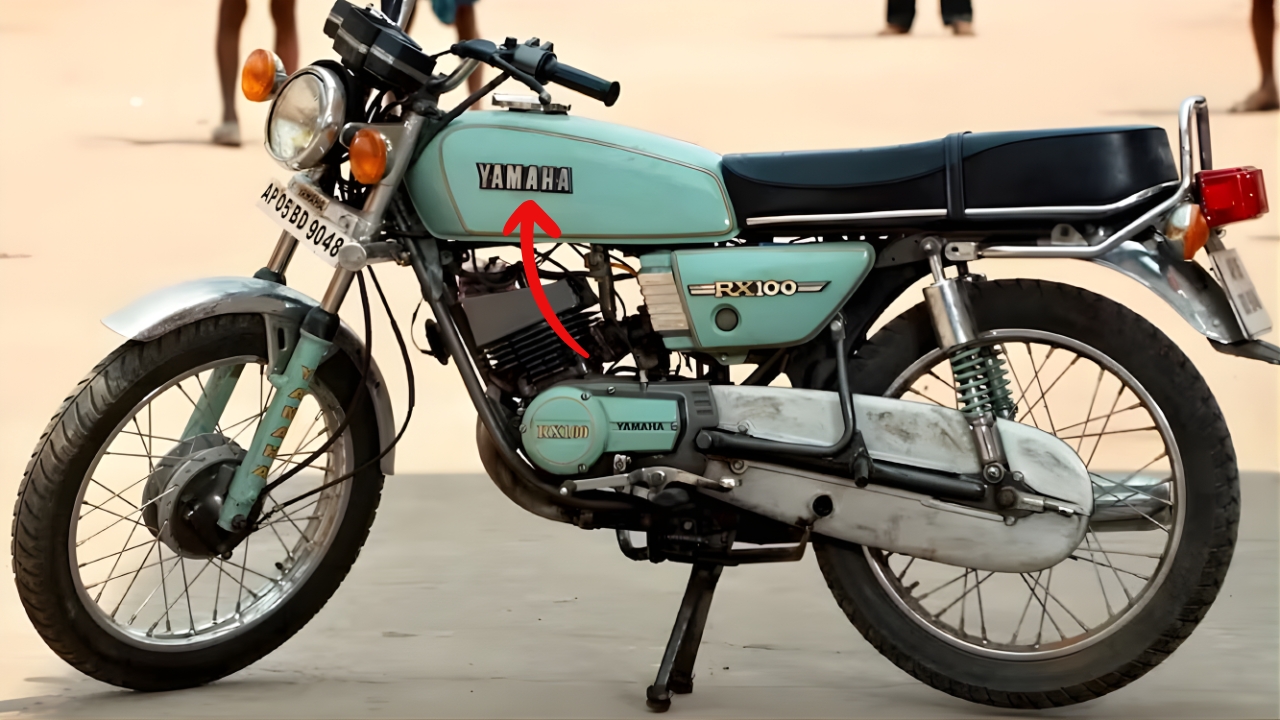
Its 10‑litre fuel tank and simple carbureted engine meant fewer electronic gremlins and easier roadside fixes, which further cemented its reputation among mechanics and DIY riders.
Also Read: Vivo X200 FE is the best 50MP Selfi camera Smartphone, 16GB RAM with Amoled curved display
The RX100 in the Modern Era
In today’s India, the RX100 no longer rolls out new from any showroom, but it remains a popular project bike for custom builds and restoration enthusiasts.
Many owners keep surviving units on road with minor upgrades—better lighting, improved carburetion, and basic suspension tweaks—while retaining the original two‑stroke character.
The bike’s compact size and low seat height also make it ideal for city‑dwellers and learners who enjoy low‑speed fun without the hassle of a heavy machine.
Why Yamaha Is Not Bringing It Back
Over the years, there have been persistent rumors about a modern RX100 revival, but Yamaha India has repeatedly ruled out bringing the 100 cc two‑stroke back in its original avatar.
Company executives have indicated that the brand is focusing on performance‑oriented and aspirational motorcycles above the 150–160 cc range, avoiding the crowded 100–125 cc commuter segment.
While Yamaha has hinted at a possible RX‑branded performance bike in the future, it has made it clear that if the RX returns, it will be a larger‑capacity, four‑stroke, track‑ and performance‑oriented machine, not a direct RX100 replacement.
The Cultural Impact Across India
Beyond numbers and specs, the RX100 has carved a unique place in Indian pop culture. It appears in countless anecdotes, college‑campus stories, and even in regional cinema and music videos as a symbol of youthful freedom and rebellion.
For many middle‑class families, the RX100 was often the first “real” motorcycle in the household—the bike that taught teenagers how to feather a clutch, how to handle corners, and how to love the sound of a two‑stroke engine at full throttle.
Yamaha RX100 : What the RX100 Means for Today’s Riders
For today’s riders, the Yamaha RX100 is less about practicality and more about legacy. It represents an era when motorcycles were simple, mechanical, and emotionally engaging rather than packed with electronics and connectivity.
Even as India marches toward electric two‑wheelers and high‑tech 150–250 cc bikes, the RX100 continues to inspire enthusiast builds, café‑racer conversions, and short‑film projects that celebrate its raw, analog charm.
Also Read This : Privacy Policy
In that sense, the RX100 is not just a discontinued model; it is a living piece of motorcycling history that still turns heads every time it hits the street.